Music:
UMH: Psalter Setting, #850
UMH: Blest Be the Tie That Binds, #557
FWS: Bind us Together, #2226
FWS: Make us One, #2224
I Need You to Survive--Hezekiah Walker
Sharing the Road--Richard Bruxvoort Colligon
Call to Worship:We gather as the people of God,
united through God’s mercy.
We gather as one people,
to worship and praise our God.
We gather, joyfully celebrating
the oneness of our purpose.
We gather, as people blessed by God:
to worship and honour our God.
We gather, renewed and refreshed by
the ever-flowing stream of God’s mercy.
We gather as people wholly dedicated
to the worship and glory of God. Amen.
Sermon Illustrations:
See Mays
Showing posts with label illustrations. Show all posts
Showing posts with label illustrations. Show all posts
Tuesday, December 10, 2013

Thursday, December 5, 2013
Psalm 24--Worship Resources
Music:
UMH: Psalter Setting, #755
UMH: Lift Up Your Heads Ye Mighty Gates, #213
FWS: Holy Ground, #2272
FWS: Hosanna, #3188
Give Us Clean Hands--Chris Tomlin
Call to Worship:
We come, praying for clean hearts and hands that we may worship God.
Our God has promised that all faithful people will receive God’s blessings.
We come, praying that through God’s grace we may stand before God.
Grace-giving God, through you alone we are able to come to worship you.
We come today, praying that we may receive blessings from our God.
Trustworthy God, you have always fulfilled your promises, and we
joyfully celebrate and give thanks for the mercies of our Gracious God. Amen.
Sermon Illustrations:
Jesus sculpture finds a home: http://ca.news.yahoo.com/blogs/good-news/ontario-man-jesus-sculpture-gets-big-fan-pope-175159441.html
Sculpture of Jesus as a homeless man sleeping on a bench was rejected from a number of sites, but has finally found a home. Could provide for an interesting point about how Jesus would have clearly walked the path that lead to the hill of God. But, when our priorities are not righteousness, the hill of God cannot be found.
UMH: Psalter Setting, #755
UMH: Lift Up Your Heads Ye Mighty Gates, #213
FWS: Holy Ground, #2272
FWS: Hosanna, #3188
Give Us Clean Hands--Chris Tomlin
Call to Worship:
We come, praying for clean hearts and hands that we may worship God.
Our God has promised that all faithful people will receive God’s blessings.
We come, praying that through God’s grace we may stand before God.
Grace-giving God, through you alone we are able to come to worship you.
We come today, praying that we may receive blessings from our God.
Trustworthy God, you have always fulfilled your promises, and we
joyfully celebrate and give thanks for the mercies of our Gracious God. Amen.
Sermon Illustrations:
Jesus sculpture finds a home: http://ca.news.yahoo.com/blogs/good-news/ontario-man-jesus-sculpture-gets-big-fan-pope-175159441.html
Sculpture of Jesus as a homeless man sleeping on a bench was rejected from a number of sites, but has finally found a home. Could provide for an interesting point about how Jesus would have clearly walked the path that lead to the hill of God. But, when our priorities are not righteousness, the hill of God cannot be found.
Tuesday, November 19, 2013
Psalm 104--Worship Resources
Music:
UMH: God of the Sparrow, God of the Whale, #122
UMH: This Is My Father's World, #144
UMH: All Creatures of Our God and King, #62
UMH: All Things Bright and Beautiful, #147
UMH: For the Beauty of the Earth, #92
FWS: Bless the Lord, #2013
All of Us Belong--Richard Bruxvoort-Colligan
Prayer:
God, whose fingers sculpt sun and moon
and curl the baby's ear;
Spirit, brooding over chaos
before the naming of day;
Savior, sending us to earth's ends
with water and words:
startle us with the grace, love, and communion
of your unity in diversity,
that we may live to the praise of your majestic name. Amen.
(W&S # 42)
Video:
Could be cool to have this playing during reading of Psalm 104.
Starling Swarm - Blender from Everton Schneider on Vimeo.
Sermon Illustrations:
New book "Earth from Space" shows high-resolution photos of Earth's surface from orbiting satellites. http://www.cnn.com/2013/11/25/tech/innovation/earth-from-space-book/index.html?hpt=hp_c3
Anne Cameron Cutri's Psalm 104 Comic--click below to check it out.

UMH: God of the Sparrow, God of the Whale, #122
UMH: This Is My Father's World, #144
UMH: All Creatures of Our God and King, #62
UMH: All Things Bright and Beautiful, #147
UMH: For the Beauty of the Earth, #92
FWS: Bless the Lord, #2013
All of Us Belong--Richard Bruxvoort-Colligan
Prayer:
God, whose fingers sculpt sun and moon
and curl the baby's ear;
Spirit, brooding over chaos
before the naming of day;
Savior, sending us to earth's ends
with water and words:
startle us with the grace, love, and communion
of your unity in diversity,
that we may live to the praise of your majestic name. Amen.
(W&S # 42)
Video:
Could be cool to have this playing during reading of Psalm 104.
Starling Swarm - Blender from Everton Schneider on Vimeo.
Sermon Illustrations:
New book "Earth from Space" shows high-resolution photos of Earth's surface from orbiting satellites. http://www.cnn.com/2013/11/25/tech/innovation/earth-from-space-book/index.html?hpt=hp_c3
Anne Cameron Cutri's Psalm 104 Comic--click below to check it out.
Wednesday, November 13, 2013
Psalm 100--Worship Resources
Music:
UMH: Psalm 100 setting, #821
FWS: How Can I Keep From Singing, #2212
FWS: Sing allelujaha to the Lord, #2258, Trad.
This is the Day
Psalm 100--Matt Gilman
Make a Joyful Noise--The Rizers (Children)
Video:
Psalm 100 from James Drake on Vimeo.
Prayer:
Exalted One, we joyfully celebrate our unlimited trust in your faithful promises. We pray that all people will someday sound a cacophony of hallelujahs as they truly accept your steadfast love. May these gifts that we gladly lay upon your altar enable ministries that support this chorus of praise. We pray with praise and thanksgiving in our hearts. Amen.
Sermon Illustrations/Resources:
"Why We Sing" by Carolyn Winfrey Gilette
"Ode to Joy" by Stacy Horn
"Have Christians Stopped Singing" by David Murrow
"The Singing Thing: A Case for Congregational Song" by John L. Bell
Missional Connection:
Lincoln County Second Chance Choir: http://www.stltoday.com/news/local/crime-and-courts/lincoln-county-inmates-perform-at-churches-as-second-chance-choir/article_62c1bcc7-5dff-53e9-aa86-7a5a995823e0.html
Inmates from Lincoln County have formed a choir, and are performing at area churches. For them, the experience brings them closer together and creates an opportunity for local congregations to make connections with those who imprisoned.
UMH: Psalm 100 setting, #821
FWS: How Can I Keep From Singing, #2212
FWS: Sing allelujaha to the Lord, #2258
This is the Day
Psalm 100--Matt Gilman
Video:
Psalm 100 from James Drake on Vimeo.
Prayer:
Exalted One, we joyfully celebrate our unlimited trust in your faithful promises. We pray that all people will someday sound a cacophony of hallelujahs as they truly accept your steadfast love. May these gifts that we gladly lay upon your altar enable ministries that support this chorus of praise. We pray with praise and thanksgiving in our hearts. Amen.
Sermon Illustrations/Resources:
"Why We Sing" by Carolyn Winfrey Gilette
"Ode to Joy" by Stacy Horn
"Have Christians Stopped Singing" by David Murrow
"The Singing Thing: A Case for Congregational Song" by John L. Bell
Missional Connection:
Lincoln County Second Chance Choir: http://www.stltoday.com/news/local/crime-and-courts/lincoln-county-inmates-perform-at-churches-as-second-chance-choir/article_62c1bcc7-5dff-53e9-aa86-7a5a995823e0.html
Inmates from Lincoln County have formed a choir, and are performing at area churches. For them, the experience brings them closer together and creates an opportunity for local congregations to make connections with those who imprisoned.
Saturday, November 9, 2013
Psalm 32--Worship Resources
Music:
UMH: Amazing Grace, #378
UMH: Grace Greater Than Our Sin, #365
W&S: Confession (Musical Response), #3138
FWS: You Are My Hiding Place, #2055
While I Keep Silence--Wright
Psalm 32--Mike & Liz Mumford
You are my Hiding Place
Pretty much any Kyrie would be appropriate, too.
Prayers of Confession and Pardon:
W&S: #84-97
BOW: #474-494
Video:
Songs of Deliverance from Biltmore Baptist Church on Vimeo.
Sermon Illustrations:
10 Risks Happy People Take: http://www.marcandangel.com/2013/10/20/10-risks-happy-people-take-every-day/
Many of these "risks" have to do with opening up about being imperfect, off-track, and being willing to grow. Sounds like what it means to open up to God in confession. Could see using this list in a sermon series on beatitudes: "Happy are those..."
Nelson Mandella's ability to forgive: http://newday.blogs.cnn.com/2013/12/08/finding-forgiveness/?sr=sharebar_facebook
A video on Nelson Mandella's forgiveness of those who imprisoned him. Conversation turns to how to begin the process of forgiveness. Clincial Psychologist discusses changing perception--confession and assurance from God can help us do this. Biblical scholar Brent Strawn discusses Psalms, especially in dealing with enemies (at 6:40). Conversation with God keeps our own sin and sin of others from taking over our entire lives.
Missional Connection:
Freeing Slaves to Rebuild Lives: http://www.umcor.org/UMCOR/Resources/News-Stories/2013/December/1203freeingslavestorebuildlives
Some of our confession may need to be on a societal level. In the case of human-trafficking, I think many of us would prefer to keep our silence on the matter--to pretend that this issue just didn't exist. But in acknowledging and talking about this issue, we begin to confess the sins of our world, even if they are not our own personal sins, and can participate in sharing God's grace in these darkened paths.
UMH: Amazing Grace, #378
UMH: Grace Greater Than Our Sin, #365
W&S: Confession (Musical Response), #3138
FWS: You Are My Hiding Place, #2055
While I Keep Silence--Wright
Psalm 32--Mike & Liz Mumford
You are my Hiding Place
Pretty much any Kyrie would be appropriate, too.
Prayers of Confession and Pardon:
W&S: #84-97
BOW: #474-494
Video:
Songs of Deliverance from Biltmore Baptist Church on Vimeo.
Sermon Illustrations:
10 Risks Happy People Take: http://www.marcandangel.com/2013/10/20/10-risks-happy-people-take-every-day/
Many of these "risks" have to do with opening up about being imperfect, off-track, and being willing to grow. Sounds like what it means to open up to God in confession. Could see using this list in a sermon series on beatitudes: "Happy are those..."
Nelson Mandella's ability to forgive: http://newday.blogs.cnn.com/2013/12/08/finding-forgiveness/?sr=sharebar_facebook
A video on Nelson Mandella's forgiveness of those who imprisoned him. Conversation turns to how to begin the process of forgiveness. Clincial Psychologist discusses changing perception--confession and assurance from God can help us do this. Biblical scholar Brent Strawn discusses Psalms, especially in dealing with enemies (at 6:40). Conversation with God keeps our own sin and sin of others from taking over our entire lives.
Missional Connection:
Freeing Slaves to Rebuild Lives: http://www.umcor.org/UMCOR/Resources/News-Stories/2013/December/1203freeingslavestorebuildlives
Some of our confession may need to be on a societal level. In the case of human-trafficking, I think many of us would prefer to keep our silence on the matter--to pretend that this issue just didn't exist. But in acknowledging and talking about this issue, we begin to confess the sins of our world, even if they are not our own personal sins, and can participate in sharing God's grace in these darkened paths.
Thursday, November 7, 2013
Psalm 32--Exegetical Thoughts
 |
| Custom Typography of Psalm 32 by MulliganStudio |
First of all, it's introductory words, "Happy are those..." echo those first words of the psalter. This is the first time we have seen this formula for the beatitude since Psalm 1, though we will see it again in Psalms 41, 112, 119, 127, and 128. Certainly this introduction indicates that there is something worth knowing about what's in this psalm. The simple fact that it starts with a beatitude leads us to believe that what follows might just show us how to attain that happiness ourselves.
Additionally, Psalm 32 echoes other key words of Psalm 1, especially torah (translated as "instruct" in vs. 8), "the way" (vs. 8), "wicked" (vs. 10), and "righteous" (vs. 11.) For other key word connections, see McCann 110.
In my earlier treatment of Psalm 1, I interpreted the ending of the path of the wicked not as a death, but as a way to acknowledge the grace of God's instruction--that it is always available to us, and we can always turn toward it from our paths of unrighteousness. As humans, we're just going to follow some wicked paths. The trick of those blessed righteous is to find our way back to the path of the faithful by looking for God's instruction, even in the midst of our wickedness.
And this is precisely the move that Psalm 32 makes. The first verse lets us know that even though one is "happy" or "blessed," it does not mean that s/he is without blemish. There will be transgression. So, what distinguishes the righteous from the wicked, then? Knowles says that it is the experience of God's forgiveness that plucks us from paths of wickedness to paths of righteousness again.

But in verse 5, the psalmist brings the sin before the Lord. Knowles points out that the psalm itself does not reveal the content of the confession, but this serves to highlight the Lord's immediate forgiveness, regardless of the content of the confession. The mere movement to communication and honesty with God elicits God's gracious response (133). Verses 6-7 function as personal witness, encouraging others to turn to God in their times of difficulty (McCann 110). The circumstances that our human imperfection creates are dire, but by turning to God, a safe place is found in the midst of disaster.
Verses 8-11 most closely resemble Psalm 1, with the clear focus on torah or instruction in "the way." Again, instruction is offered, but not forced. The psalmist states that though it may not be the best option to forego torah, it is still an option (vs. 9). That said, by confessing to God, humans display their trust in God. And trusting in God also helps us to see the hesed that is always available to us. In these ways, Psalm 32 offers a fuller picture of the instruction promised in Psalm 1, and shows us just how to locate "the way" again when we have wandered from the path of the righteous.
One instructional moment for me in Psalm 32 is the use of different words for sin in verses 1-2. Limburg points out that these words represent major themes in the OT (103). I think it's important to recognize that there are many ways to wander from the path of the righteous, and that in confession, it also helps to understand how one has strayed. The four words for sin are:
- transgression--a rebellion
- sin--missing the target
- iniquity--being bent, twisted, or crooked
- deceit--treacherous or unreliable (Limberg 103)
So often, we think about sin in a singular sense, as if there is only one way to stray from God's intentions for the world. Psalm 32 helps us to understand that there are many ways to get off-track, with some of them requiring less conscious action than we might like to believe.
Psalm 32 draws attention to the fact that we will slip up, we will wander from the path of the righteous. We're only human. But it also draws attention to the fact that God is always available to hear our cries of uncertainty, of apology, of confusion during these times of wandering. And it is from voicing these cries that we are also able to find our voices again to be able to"shout for joy" (vs. 11).
Thursday, October 31, 2013
Psalm 82--Worship Resources
Music:
UMH: What Does the Lord Require, #441
UMH: O Day of God Draw Nigh, #730
UMH: Psalter Setting, #804a
UMH: This Is My Song, #437
To the Powers of the Earth (Psalm 82)--Stephen Pearson
Psalm 82 from the Emergent Psalter--Isaac Everett
Video:
Psalm 82 from The Voice Translation
Prayer:
God, every time the powerful meet together, you take a seat at their table.
Though unseen, you see.
Though unaddressed, you address.
And you say to them, "Strengthen the weak. Stand up for the orphans. Rescue the needy. Pursue the wicked."
But the powerful ignore your words. They fail to consider your call.
Therefore, God, take charge. Take over.
Do what they will not.
Strengthen the weak. Stand up for the orphans. Rescue the needy. Pursue the wicked.
And help us to do the same. Amen.
Sermon Illustrations:
"Confronting Visual Biases" http://www.huffingtonpost.com/2013/11/22/the-passage-cardboard-signs_n_4319568.html
What if, instead of doing injustice, the powerful actually stood in for those who were weak, orphaned, lowly, or destitute? A charity in London asked its volunteers to do just that. They hold hand-lettered, cardboard signs that proclaim their privilege and their decision to use that privilege to help those who do not have it. Pretty sure this divine council would get excellent performance reviews.
Missional Connection:
Health care for mothers and children in Sierra Leon: http://www.umcor.org/UMCOR/Resources/News-Stories/2013/December/sierraleonematernalchildhealth
UMH: What Does the Lord Require, #441
UMH: O Day of God Draw Nigh, #730
UMH: Psalter Setting, #804a
UMH: This Is My Song, #437
To the Powers of the Earth (Psalm 82)--Stephen Pearson
Psalm 82 from the Emergent Psalter--Isaac Everett
Video:
Prayer:
God, every time the powerful meet together, you take a seat at their table.
Though unseen, you see.
Though unaddressed, you address.
And you say to them, "Strengthen the weak. Stand up for the orphans. Rescue the needy. Pursue the wicked."
But the powerful ignore your words. They fail to consider your call.
Therefore, God, take charge. Take over.
Do what they will not.
Strengthen the weak. Stand up for the orphans. Rescue the needy. Pursue the wicked.
And help us to do the same. Amen.
Sermon Illustrations:
"Confronting Visual Biases" http://www.huffingtonpost.com/2013/11/22/the-passage-cardboard-signs_n_4319568.html
What if, instead of doing injustice, the powerful actually stood in for those who were weak, orphaned, lowly, or destitute? A charity in London asked its volunteers to do just that. They hold hand-lettered, cardboard signs that proclaim their privilege and their decision to use that privilege to help those who do not have it. Pretty sure this divine council would get excellent performance reviews.
Missional Connection:
Health care for mothers and children in Sierra Leon: http://www.umcor.org/UMCOR/Resources/News-Stories/2013/December/sierraleonematernalchildhealth
Tuesday, October 29, 2013
Psalm 82--Exegetical Thoughts

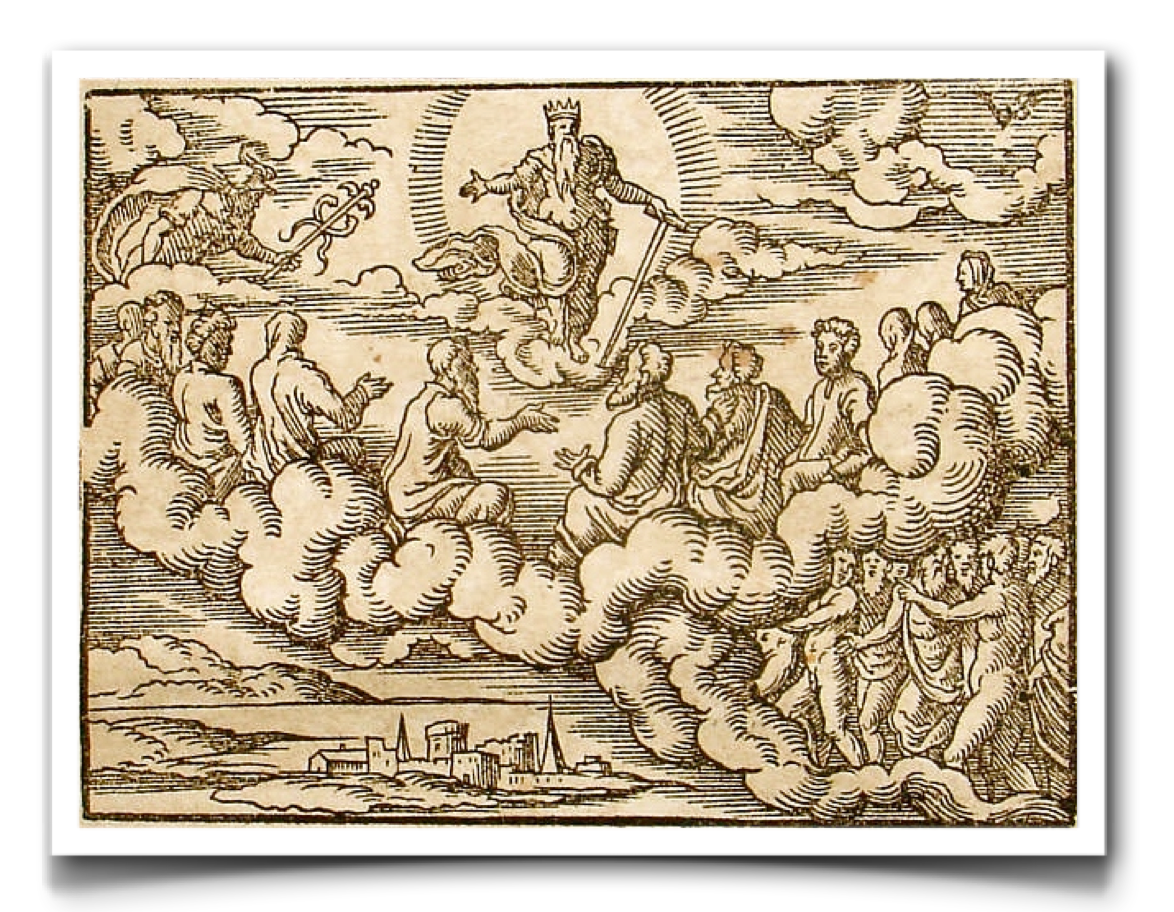 |
| Council of Gods before the Deluge Engraving by Virgil Solis for Ovid's Metamorphasis |
McCann points out that the key root word in Psalm 82--which is also a key word for the psalter and prophetic literature of the OT--is translated in English as "justice," and occurs four times in the short eight verses of this psalm (122-123). It is what God does to the other gods (holds them in judgment, vs. 1), accuses them of being unjust judges (vs. 2), reminds them of what true justice is (giving justice to the weak and orphan, vs. 3), and eventually, it is the key to the prayer of the psalmist (vs. 8). It is fair to say that Psalm 82 is a psalm about justice that provides us with a working definition of God's justice.
In verses 3 and 4, we hear what the gods should have been doing: caring for those people who cannot fully care for themselves and defending those who seek to exploit them. This divine council has not been meeting expectations, but instead, they "walk in darkness" (vs. 5). But instead of just being an inept cast member on a reality television show that ultimately has no consequence, these gods' negligence has caused real strife. Namely, they have caused the earth to fall apart. McCann writes that verse 5 suggests that "injustice is the undoing of creation. Where injustice exists, the world--at least the world as God intends it--falls apart. Injustice--any situation in which some people live at the expense of others--is incompatible with life as God intended it for the creation" (124).
So, in the words of Donald Trump, "You're fired." Right? Right. And that is the incredible movement of this psalm. God is so concerned with the plight of those who are oppressed, suppressed, and powerless that God will remove every power that oppresses, suppresses, and tamps them down. To participate in injustice, or even to be blind to it (as verse 5b may suggest) is to have failed to carry out the will of God. And in that case, God will fire you.
Verse 8, however, reveals another layer to Psalm 82. A short prayer follows this scene, a prayer of the psalmist popping up to call on God. To me, this movement illuminates the fact that Psalm 82 is the function of an active theological imagination--an imagination that takes the witness of the Hebrew Scriptures very seriously; that integrates them seamlessly into a mythological worldview that would not have been uncommon in the Ancient Near East. McCann focuses on the theological message of this psalm--that God's ultimate will for creation is the establishment of justice by caring for those who are in need. In class, we discussed how Jesus, as the fullest revelation of God's will, as he did work for justice in the ways outlined in verses 3 and 4, is fully divine. However, I think that this final verse has something important to say about the anthropology of the Psalms.
Mays writes that false gods are always with us: "The ancient gods have not disappeared. They have simply assumed different shapes and faces" (Preaching 151). He describes the hold that the gods of the middle-class capitalist culture. "Such gods are always with us," he writes (151), "always a part of the human predicament, the ceaseless art of our feverish genius for evading the actual divine human encounter with the Father of Jesus Christ" (Preaching 151). But here's the interesting part...at the end of Psalm 82, in that last verse, in that fervent prayer for God to come and establish justice in the places where injustice threatens to destroy creation, the psalmist reveals that he is not evading the divine human encounter...he is crying out for it.
In imagining God in the midst of the divine council, the psalmist has already begun to imagine a way in which the world may be put together in a better, more just way--a way that corresponds with God's will. Strawn points out that the psalmist's picture emphasizes the "close connections drawn throughout the psalm between heaven and earth" (82). He draws a parallel between today's boardroom or judge's chambers. Certainly, it is so easy to become disillusioned with the world today, to only see injustice, to become frustrated with the oppressive systems that rend the fabric of our communities. But Psalm 82 gives humanity a starting point--to look past the hopelessness of the situation into the reality that God stands in the midst of the unjust gods of our time and to pray the prayer that concludes the Psalm--"Rise up, O God..."
How God rises up isn't so easy to imagine. But Psalm 82 assures us that recognizing that God's mercy and power are present in these situations may just give us eyes to see what else God is doing to establish justice in our midst.
Tuesday, October 8, 2013
Psalm 69--Exegetical Thoughts
 |
| "Save me, O God, for the waters have come up to my neck." Illustration by Jim Lockey |
$#!+ happens. Everybody hurts. Suffering isn't just a literary ploy utilized in the Psalms for dramatic emphasis--it is the stuff of real life. As humans we endure loss, grief, pain, and uncertainty. Mays points out that these experiences are inherent in the human condition (111). But what else does Psalm 69 teach us is inherent in the human condition?
Because we cannot read a specific historical figure or context out of Psalm 69, it serves as a prayer for many circumstances, circumstances that are as relevant today as they might have been in ancient Israel: alienation from society, friends and family because of one's faith; being falsely accused and accept guilt; feeling isolated and alone in human community. And so, we turn to God. Though Psalm 69 speaks of alienation, it is not speak alienation to us. Instead it speaks of the human ability to reach out to Creator God in times of distress.
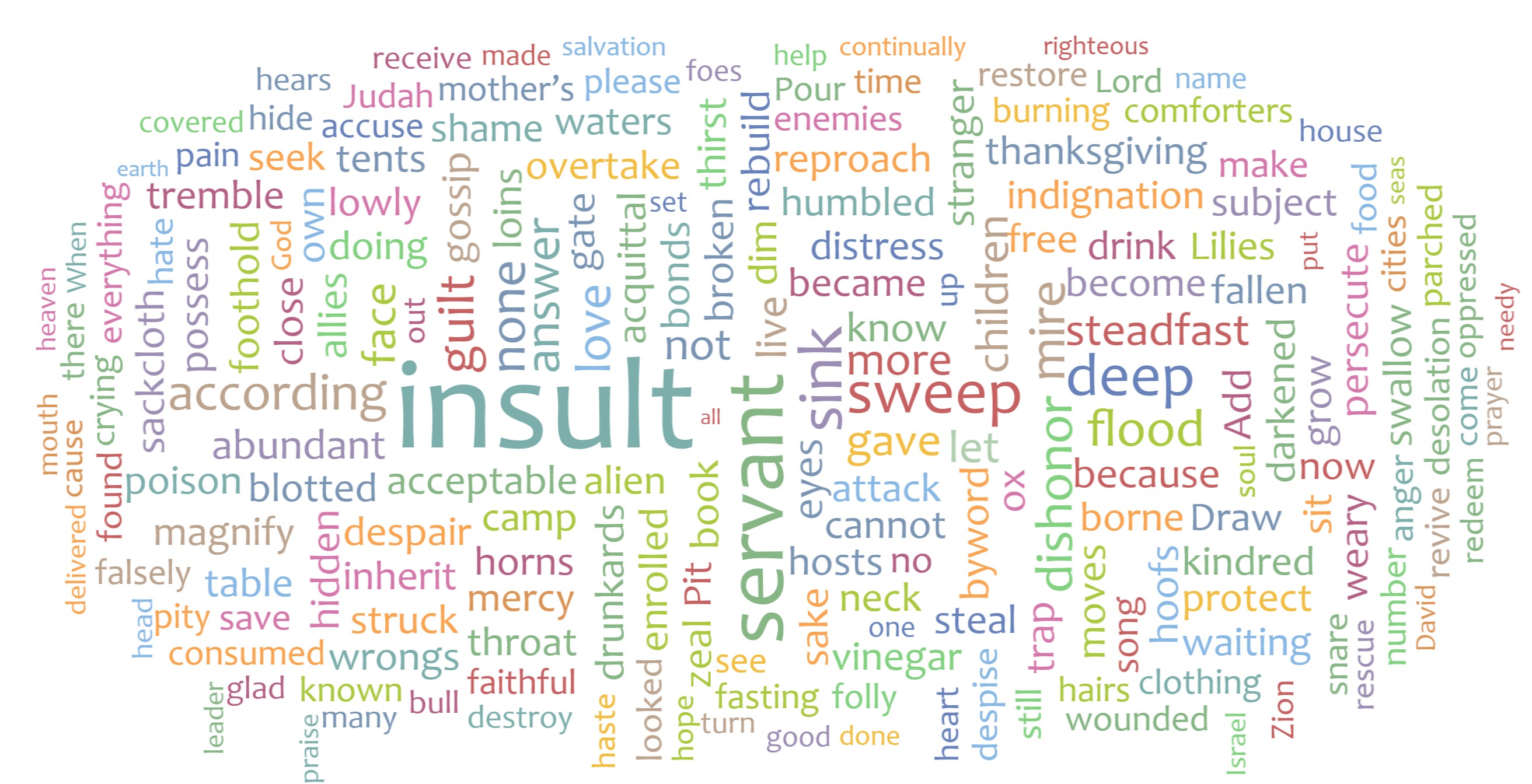
We have the capacity for suffering. God has the capacity to hear our laments. But it's more than that. Mays writes, "Nothing that comes to any human being--no tears, no depth, no anguish--is beyond and without the kingdom of God" (Preaching 115). Or, as Paul riffs on Psalm 69, there is nothing that can separate us from the love of God (Rom. 8: 39). The laments also show us that humans have the capacity for praise in the midst of difficulty. It's easy to read the praise turns in the laments and to assume that some major break has occurred in the poem, that some radical change in circumstance has taken place, that God has waved a magic wand to rescue the psalmist from waters that are up to his neck. Rather, I read this shift of praise as another expression of universal and essential humanity--that we can be comforted in the most dire of circumstances by the knowledge of God's sovereign reign. As Mays writes, "We are shown who we are when we pray" (116), and the fundamental message of Psalm 69 is that no matter the circumstances, we are still God's. This affirmation of faith doesn't cure our circumstances, but it does help us to understand that though difficulty may characterize our human condition, these conditions are still embedded in God's steadfast love and abundant mercy (Ps. 69: 16).
 |
| "Psalm 69: Sinking Not Sunk" by Melani Pyke |
Additionally, I think you'd need to touch on the NT interpretations of Psalm 69 (See Limburg 230), with the understanding that this use of Psalm 69 affirms the deep humanity of Jesus, in that he identified with the suffering and praise present in the psalm, but also acted in an exemplary manner in his faithful relationship with God through that suffering.
Tuesday, September 24, 2013
Psalm 13--Exegetical Thoughts

- Before I read the commentaries for the lament psalms, I hadn't realized that a lament is actually a "call for help" (Limburg 38). Honestly? I thought a lament was simply a complaint, a wailing, a plaintive cry. And while a complaint is certainly a part of a lament psalm, it's not the whole story--at least not in Psalm 13. Understanding the genre of lament as a call for help helps the reader to understand that Psalm 13 is a prayer that leads somewhere, both in the moment of prayer and in studying it. It offers both comfort and theological instruction about the relationship between God and humanity.
- Scholars refer to the three characters of the lament psalms--God, self, and enemy-- in terms of theology, psychology, and sociology (see McCann 86, Mays 78, Strawn 71). In the lament, it becomes clear that something in these relationships has gone awry, something is troubling. In today's world, we tend to treat each of these areas (theology, psychology, and sociology) as their own distinct spheres, as if they don't intersect at all. What Psalm 13 points out is that these are deeply connected, and if there is an imbalance in any of them, there is an imbalance in all--we lose our identity as people of God, as ourselves, and as a member of a human community. We "sleep the sleep of death" (vs. 3).
- Though there is a radical turn in verses 5-6, I think it's important to point out the address of the lament: directly to God. This gesture lets us know that it's OK to come to God with our worst and at our worst. Crying out to God isn't a crime. But something about it seems strange to us. As McCann points out, there is a pointed avoidance of lament psalms in our culture (85-86), as if we cannot make sense of them. But I think the fact that texts that border of blasphemous are considered to be a part of our cannon is important. Being honest about our circumstances is just a part of being a faithful person, warts, complaints, and all (Mays 78, Limburg 38).

- I want to focus in on verse 2a: How long must I bear pain in my soul, and have sorrow in my heart all day long? When I read this, I am immediately transported to the time I spent answering a suicide hotline. Whether the voices were overflowing with pain or numbed by their struggles with it, their cries gave voice to the uncertainty of their plight, of knowing they were in the midst of suffering, but not knowing how begin see anything beyond it. It was like a tunnel vision of suffering. McCann's literal reading of the Hebrew here highlights the isolation these callers voiced: "How long must I hold counsel in my soul" and "sorrow in my heart" (91). Theirs were literally calls for help. They saw no way but the way of death before them. They needed light in their eyes, a way to see beyond their circumstances. One of the techniques we were instructed to use was to ask what coping mechanisms for difficult feelings had worked for callers in the past. Then, we would explore with them how those very skills might be available to them now.
- This is how I read the turn in verses 5-6: a remembrance of God's faithfulness in the past illuminates their future. So often, we want our answers to appear out of the blue, illuminating a bright new future, divorced, somehow, from the suffering we have felt. Mays eloquently lays out how this thinking is incorrect, and how the "agony and the ecstasy belong together as the secret of our identity" (Preaching 168). The lightening of the eyes that occurs is not into a new reality, but is in a remembered reality of a faithful God. And in the remembrance, a new way of living emerges. Perhaps Psalm 13 is a lament of one who has taken the wrong "way" (Ps. 1). And perhaps it's a lament that helps the sufferer find her way back to he way of the righteous after all.

Friday, September 13, 2013
Psalm 1--Worship Resources
Music:
UMH: Psalter for Psalm 1, #738
UMH: #601 "Thy Word Is a Lamp"
Faith We Sing: "I Will Enter His Gates"
"Blessed Is the Man" Psalm 1:1-2, The Psalms Project
"He Is Like a Tree" Psalm 1:3
Video:
Psalm 1 - Sacred Guardian by Elijah Aaron
Psalm 1 - Sacred Guardian by Elijah Aaron
Prayer for Illumination from Worship & Song
Eternal God,
in the reading of the Scripture, may your Word be heard;
in the meditations of our hearts, may your Word be known;
and in the faithfulness of our lives, may your Word be shown. Amen.
Collect based on Psalm 1:
God of torah,
who invites all to follow the way--
the way that leads to life,
the way that leads to peace,
the way that leads each of us to this very moment--
watch over our learning
so that we may be more than educated,
more than well-read,
more than simply proficient;
watch over our learning
so that we may become
students of your instruction
students who delight in your instruction
as we continue in the way.
We pray this in the name of Jesus Christ,
our trailblazer and our teacher.
Amen.
Articles and Illustrations:
"10 Decisions That Will Make You Happier and Healtier" Huffingtonpost.com
"10 Things Happy People Do Differently" Psychologytoday.com
"What the Happiest People Know for Sure" Oprah.com
"Atheism as ultimate white privilege" patheos.com
Subscribe to:
Posts (Atom)